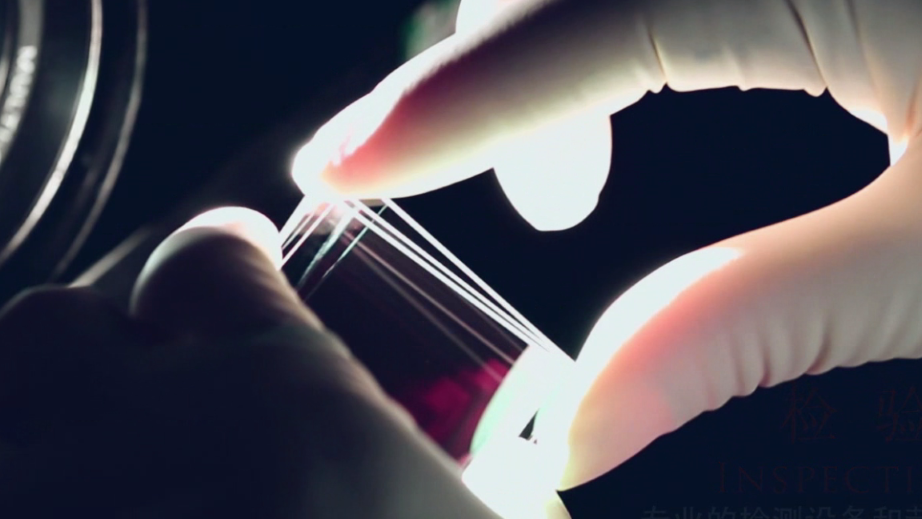
Lumus waveguides are designed for performance and scale. Using standard tools, materials, and manufacturing processes developed with supply-chain partners, Lumus enables fast, reliable ramp-up to high-volume production—removing one of the biggest barriers to bringing AR glasses to market.

Manufacturing steps

How Is It Made?

Lumus reflective waveguides are made using standard machines
and materials used in the optics industry for more than 100 years.
01
Coating
Glass plates are coated with standard optics materials to create partially transmissive, partially reflective surfaces.
02
Stacking
Multiple coated glass plates are stacked and bonded together using an optical adhesive.
03
Slicing
The consolidated glass plates block is sliced using a high-precision saw exposing the embedded mirror array.
04
Surface Polishing
The newly sliced surfaces are polished to achieve optical grade smoothness and clarity.
05
Waveguide Shaping
The polished glass is shaped into the final required design for the customer.
06
Testing
Waveguides are tested for quality and reliability.
Manufacturing footage courtesy of SCHOTT, filmed at its waveguide production facility, demonstrating its mass-production capabilities.

Our manufacturing promise

Lumus waveguides scale reliably to mass production, delivering competitive costs and industry-leading yields. A single production line can manufacture multiple FOVs with slight modifications.


>95%
Yield with our manufacturing partner in Schott and Quanta.
>200K
More than 200K waveguides shipped.
>100
Years of using these standard tools and materials in optics.

Partners

Our Manufacturing Partners

Taiwan

Quanta Computer

Malaysia

SCHOTT

Let's talk

Explore What’s Possible

Lumus offers the highest performance waveguides and a path to mass manufacturing for the consumer, military and industrial markets.
Send us a message
Full Name
Email
Subject
Message
By sending, you accept our Privacy Policy.
Thank you! Your submission has been received!
Oops! Something went wrong while submitting the form.