Products

Geometric Waveguides and Optical Engines

Start your Integration

Companies that we work with

product

Z-lens

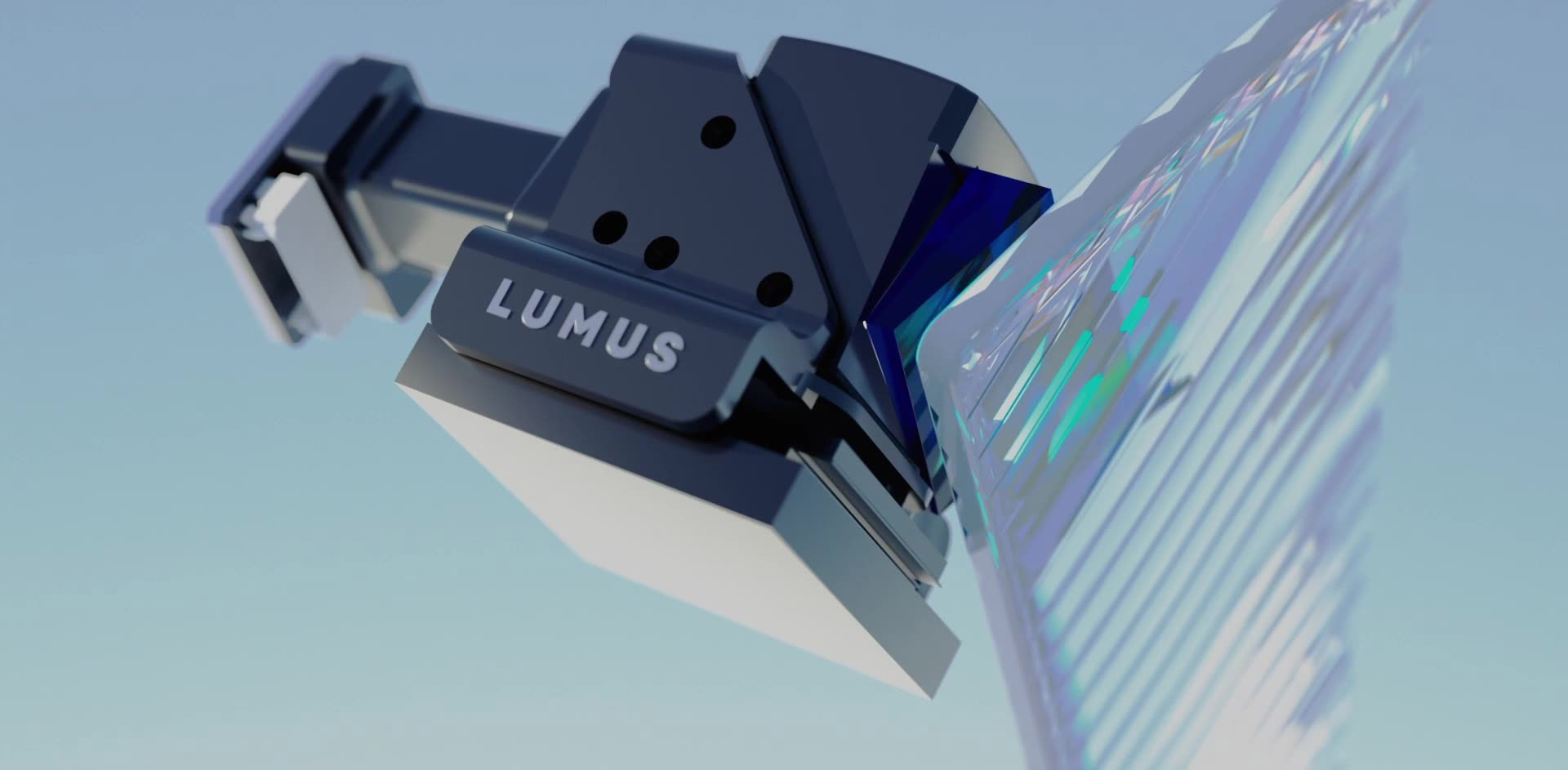
Z-Lens features a 2D waveguide coupled with a smaller projector and ability to directly bond Rx lenses.
Angle of View
50°
Resolution
1024 x 1024 pixels
Waveguide Thickness
1.3 mm
Z-Lens
Z-Lens features a 2D waveguide coupled with a smaller projector and ability to directly bond Rx lenses.
Angle of View
50°
Resolution
1024 x 1024 pixels
Waveguide Thickness
1.3 mm
Z-Lens
Z-Lens features a 2D waveguide coupled with a smaller projector and ability to directly bond Rx lenses.
Angle of View
50°
Resolution
1024 x 1024 pixels
Waveguide Thickness
1.3 mm
Z-Lens
Z-Lens features a 2D waveguide coupled with a smaller projector and ability to directly bond Rx lenses.
Angle of View
50°
Resolution
1024 x 1024 pixels
Waveguide Thickness
1.3 mm

product

Maximus

Maximus OE - 2D pupil expansion waveguide coupled with a small projector currently used in military and medical devices.
Angle of View
50°
Resolution
1440 x 1440 pixels
Waveguide Thickness
1.7 mm
Maximus
Maximus OE - 2D pupil expansion waveguide coupled with a small projector currently used in military and medical devices.
Angle of View
50°
Resolution
1440 x 1440 pixels
Waveguide Thickness
1.7 mm
Maximus
Maximus OE - 2D pupil expansion waveguide coupled with a small projector currently used in military and medical devices.
Angle of View
50°
Resolution
1440 x 1440 pixels
Waveguide Thickness
1.7 mm
Maximus
Maximus OE - 2D pupil expansion waveguide coupled with a small projector currently used in military and medical devices.
Angle of View
50°
Resolution
1440 x 1440 pixels
Waveguide Thickness
1.7 mm

product

Vision

Top-down display for enterprise and medical customers featuring 1080p resolution. Selected by Lenovo for the ThinkReality A6 product.
Angle of View
40°
Resolution
1920 x 1080
Waveguide Thickness
1.7 mm
Vision
Top-down display for enterprise and medical customers featuring 1080p resolution. Selected by Lenovo for the ThinkReality A6 product.
Angle of View
40°
Resolution
1920 x 1080
Waveguide Thickness
1.7 mm
Vision
Top-down display for enterprise and medical customers featuring 1080p resolution. Selected by Lenovo for the ThinkReality A6 product.
Angle of View
40°
Resolution
1920 x 1080
Waveguide Thickness
1.7 mm
Vision
Top-down display for enterprise and medical customers featuring 1080p resolution. Selected by Lenovo for the ThinkReality A6 product.
Angle of View
40°
Resolution
1920 x 1080
Waveguide Thickness
1.7 mm

product

TD-2020

A top-down industrial strength, bright personal display for specialized applications.
Angle of View
32º
Resolution
800 x 600
Waveguide Thickness
2.3mm
TD-2020
A top-down industrial strength, bright personal display for specialized applications.
Angle of View
32º
Resolution
800 x 600
Waveguide Thickness
2.3mm
TD-2020
A top-down industrial strength, bright personal display for specialized applications.
Angle of View
32º
Resolution
800 x 600
Waveguide Thickness
2.3mm
FAQ

Questions, Answered With Clarity

Here you’ll find answers to the most frequently asked questions about Lumus, our technology, and its applications. This section is designed to provide clear, practical information for partners, customers, and anyone exploring our solutions.
Let's Talk
How does the technology improve privacy and "eye glow"?

Because light is reflected and steered toward the eye rather than diffracted in many directions, only a small fraction leaks outward, so bystanders see little to no readable image in the lens. This "privacy by design" contrasts with diffractive waveguides, where strong external eye glow and visible content are common complaints in social and professional environments.

What display technologies work with Lumus?

Lumus optical engines are display agnostic: they can pair with LCOS, microOLED, laser scanned, or microLED projectors, if the optics collimate light into the waveguide entrance aperture.

The high efficiency of the reflective architecture is particularly attractive for microOLED and microLED, where driving the emitters at lower peak brightness extends lifetime and reduces power draw.

Why do Lumus waveguides matter for everyday AR glasses?

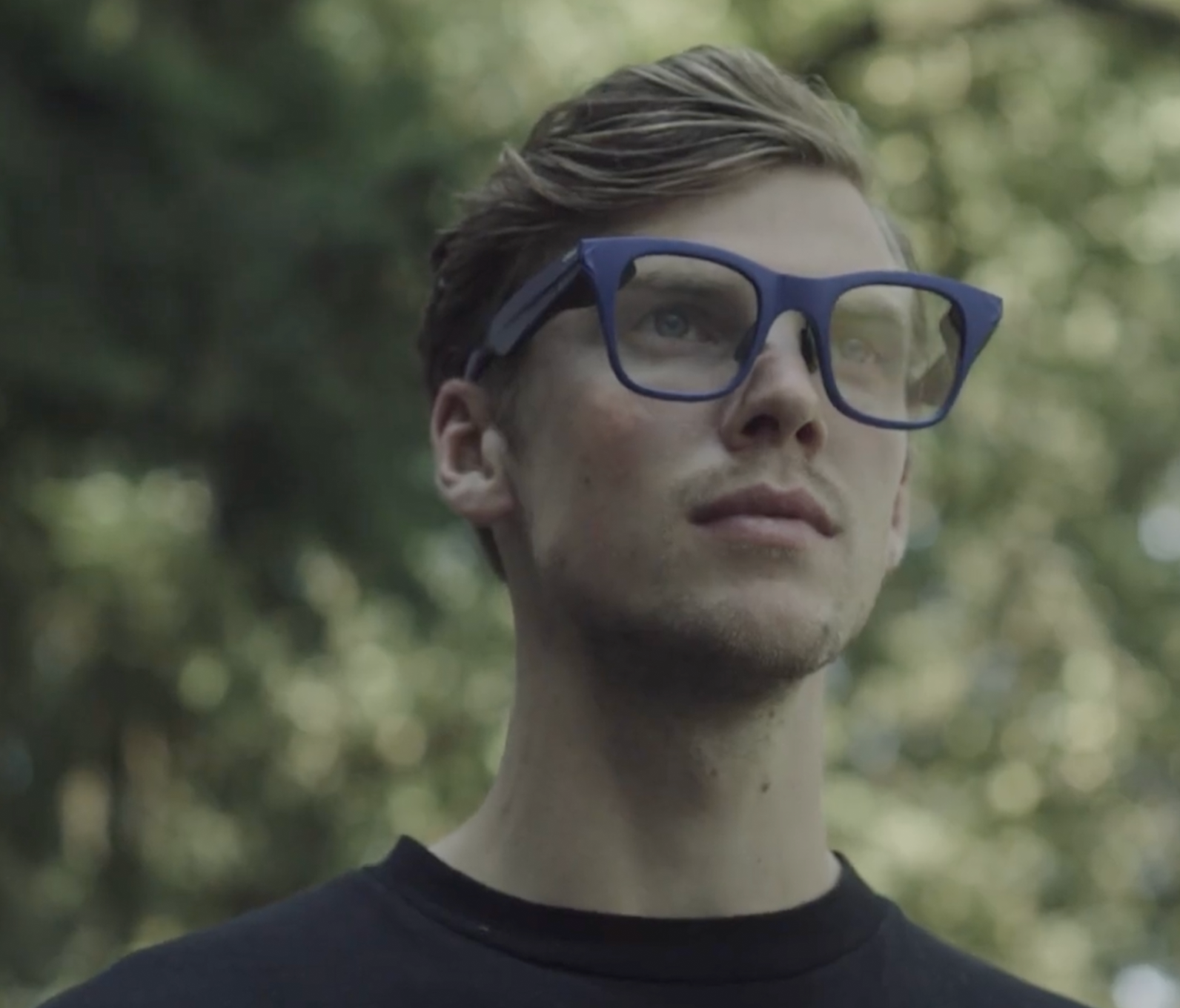
Because they are thin, transparent, and efficient, Lumus type waveguides enable glasses like form factors with large FOV (50–70° in current designs) while still delivering daylight capable brightness and long battery life.

This combination of ergonomics and visual performance is difficult to achieve with bulkier combiner optics or less efficient diffractive approaches, making geometric waveguides a key enabler for truly wearable AR.

What are the main advantages over diffractive waveguides?

Reflective waveguides deliver much higher optical efficiency, which translates into significantly lower power consumption and the ability to stay visible even in bright environments without extreme projector nits.

They also provide superior color uniformity (true whites, minimal rainbow artifacts) and far lower outward "eye glow," improving both visual comfort and privacy compared with typical diffractive stacks.

How does a Lumus waveguide work?

A miniature projector (LCOS, microOLED, laser, or microLED) creates a virtual image and injects it into the waveguide entrance; inside, arrays of partially reflective mirrors perform two dimensional pupil expansion, so the same image is replicated across a wide eyebox. As light exits through the mirror array toward the eye, the user sees a floating image overlaid on the real scene, with uniform brightness and color across the field of view.

How are geometric waveguides different from diffractive waveguides?

1. Geometric waveguides use principles of classical geometry and reflection to manipulate light. Light is guided by Total Internal Reflection (TIR) and coupled out by an array of microscopic, semi-reflective mirrors (or beam splitters) embedded inside the glass substrate. Manufacturing involves thin-film coating, polishing, and bonding/lamination processes (similar to traditional lens making). No exotic materials are necessary. The outcoupling element are partially reflective mirrors/coatings.

2. Diffractive waveguides use principles of diffraction to manipulate light, relying on tiny, nano-scale structures etched onto or embedded in the glass surface. Light is
guided and coupled out by nanoscopic periodic structures called gratings (either Surface Relief Gratings or Volume Holographic Gratings), which bend and split the light. Manufacturing involves advanced lithography or nanoimprint processes. The outcoupling elements are Nano-gratings (periodic structures).

Read more on Geometric Waveguides here.
What determines the field of view?

The angles of confinement, the coupler geometry, and the physical thickness/shape of the guide.

Are Lumus waveguides used in AR glasses?

Yes - several consumer and enterprise AR devices rely on geometric or reflective waveguides. Lumus’ geometric waveguides are available in Meta’s commercial AR glasses.

Do geometric waveguides support full color?

Yes. Since they are not wavelength-selective, they are naturally broadband. However, brightness and uniformity can still vary across RGB.

Are geometric waveguides efficient?

Yes. Typically, they are 5X-10X more efficient than diffractive alternatives.